



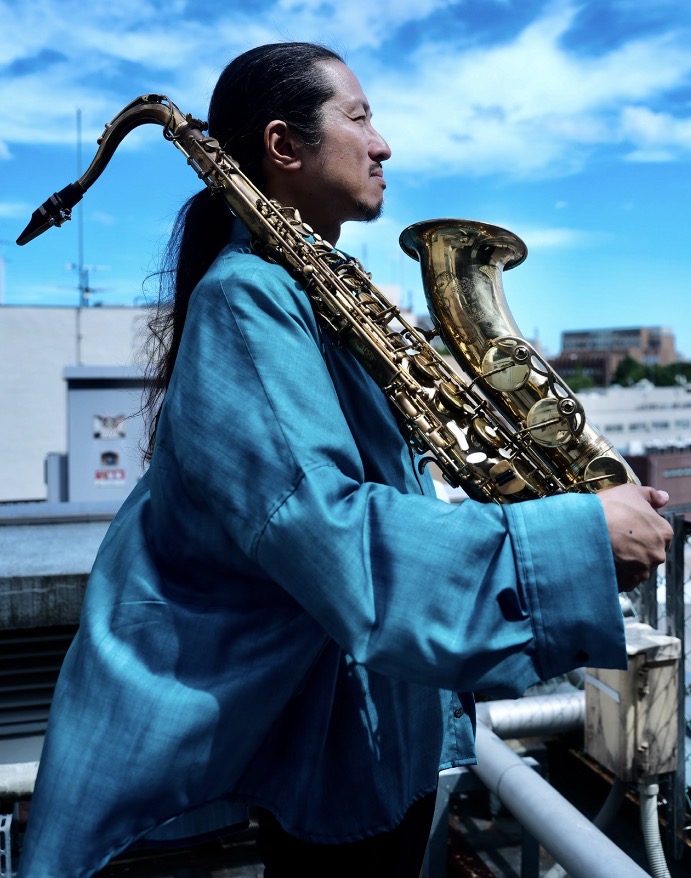
Originally from Mito, Ibaraki, and currently based in Tokyo, Japan, Sinsuke Fujieda is a saxophonist, flutist, composer, and music producer. He performs on tenor and soprano saxophones and flute, and also occasionally plays overtone-based instruments such as bamboo clarinet, overtone flute, and khoomei.
He is the founder and owner of the independent label SoFa Records, through which he releases and produces his own work with full artistic and creative control. His work connects composition, improvisation, sound, and lived experience.
As the leader of SINSUKE FUJIEDA GROUP, his music has reached jazz, spiritual jazz, and vinyl listeners around the world. His vinyl releases through France’s Superfly Records have received international attention. The first pressing of Fukushima sold out worldwide.
Mick: Shinsuke Welcome to Soul Discovery
Shinsuke: Mick, thank you so much for giving me this opportunity to share my story with your listeners.
Q1. When did you start learning to play your instruments? Which came first, saxophone or flute?
I started with the saxophone. When I was 17, at the beginning of my final year of high school, I heard Charlie Parker and was so deeply affected by his music that I decided I wanted to become a jazz saxophonist. The following year, at 18, I entered university, joined a jazz band club, and began teaching myself the alto saxophone. That was the beginning of my life as a musician.
Q2. Tell me about your instruments. How would you describe your relationship with the saxophone and flute?
Playing the saxophone is the origin of my musical life and, in many ways, the foundation of the life I live today. Both the saxophone and flute are ways of expressing something within me. I sometimes think of them as different brushes in a painter’s collection.
Each instrument has its own character, and I choose between them depending on what I want to express.
Q3. When did you realise you wanted to become a composer? Did composing come naturally to you?
It might sound strange, but I think I became interested in composing when I started exploring music outside jazz. Before that, I was mainly focused on being a player — learning jazz standards, developing my improvisation, and finding my own voice on the saxophone. But eventually, I reached a point where I felt something was missing.
Around that time, I began exploring painting and other forms of art. I became interested in the relationship between an artist and the work they create, and in what it means to bring a work of art into existence. I also began listening to the many different kinds of music outside jazz that surrounded me in contemporary Japan.
These experiences gradually changed my perspective. Instead of thinking only about how to perform existing music, I began asking myself what I really wanted to express. Composing emerged quite naturally from that change.
Q4. Who were your main influences in jazz, from Japan or around the world?
Charlie Parker was my first major influence. Hearing his music was such a powerful experience that it inspired me to start playing the saxophone. Another musician who had a tremendous impact on me was Pharoah Sanders. During my final year at university, when I decided to dedicate my life to music, I heard his album “Live!” The opening tenor saxophone roar on “You’ve Got to Have Freedom” completely overwhelmed me. It was the first time since discovering Charlie Parker that I had experienced such a powerful shock from the saxophone. It opened my mind to the incredible possibilities of expression through the instrument.
Q5. How and why was SINSUKE FUJIEDA GROUP formed?
SINSUKE FUJIEDA GROUP developed from my desire to explore my own compositions and improvisation through an ensemble. I didn’t want a group that simply performed the music I had written. I wanted to create something where the individuality and sensitivity of each musician could interact, allowing the music to develop beyond what I could imagine on my own. Our music is rooted in jazz, but it also reflects the many different kinds of music and artistic expression I’ve encountered throughout my life.
The 2020 live recording that became “INFORMEL” was an important turning point in the development of the group as it exists today. That concert was organised to celebrate the release of “Gentle Erosion,” a composition and video work I released earlier that year, reflecting my inner experience of the COVID-19 pandemic. The performance was recorded and filmed, and those recordings later became “INFORMEL.”
Q6. When did you establish SoFa Records, and what inspired you to create your own label?
I founded SoFa Records in 2012. The previous year, Japan experienced the Great East Japan Earthquake. That experience made me deeply aware that the everyday life we take for granted is never guaranteed. As an artist, I began to feel a strong need for a platform where I could turn what I genuinely believed in into finished works, without compromising the original vision.
I wanted to make my own creative decisions and take responsibility for bringing my music into the world. In a way, it’s similar to how a painter creates and completes a work of art according to their own vision. That was the reason I established SoFa Records. And that philosophy remains the foundation of the label today.

Q7. Could you explain the concept behind Sound Furniture and its various projects?
Sound Furniture is another musical project of mine, which began in 2009. It started when I was invited to create music for an art installation. At that time, I wanted to approach music without thinking primarily as a saxophonist, or about the kind of music people expected me to make. Instead, I wanted to imagine music itself more freely. The name Sound Furniture reflects the idea of music existing as part of a space. Just as beautifully made furniture can enhance the atmosphere and value of a room simply by being there, I imagined music that could transform the quality of a space and influence the senses of the people within it. In that sense, I was interested in creating music that also had a function within an environment. “VIRGINSNOW” was the first album in which I developed these ideas into individual compositions.
Later, I began exploring the same concepts through installation performances involving improvising musicians in different spaces. “Rituals” was a solo album that grew out of those explorations. “TONERIUM” was a soundscape project inspired by water. Projects such as “Orchestra in Park Ambient,” “Afternoon in Park Ambient,” and “In/Lay” documented performances and experiments involving sound, space, and live improvisation. For me, Sound Furniture is a way of exploring sound beyond the boundaries of any particular instrument or musical genre.
It’s about sound, space, time, and human perception.
Q8. How did “FUKUSHIMA” come to be released by Superfly Records in France?
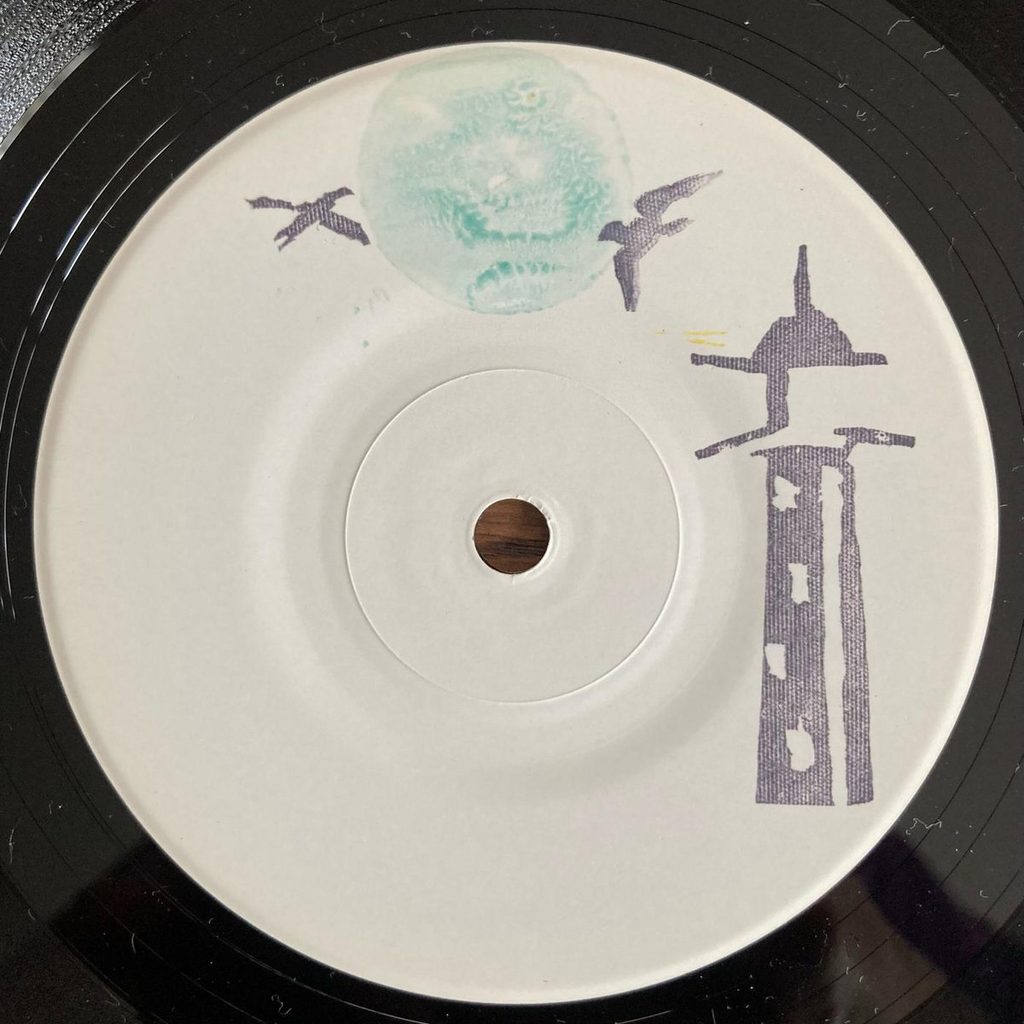
The connection began with a 7-inch record I released in 2021.
Paulo from Superfly Records knew the owner of the label that had released that record, and through that connection, he came to see one of my live performances. After hearing the group perform, he told me that he really wanted to release an LP of our music on Superfly Records.
We completed the recording of “FUKUSHIMA” in 2023. It took some time before the album was finally released in 2025, but looking back, I think the timing turned out to be very good. I’m incredibly happy that the music has reached listeners in so many different countries.
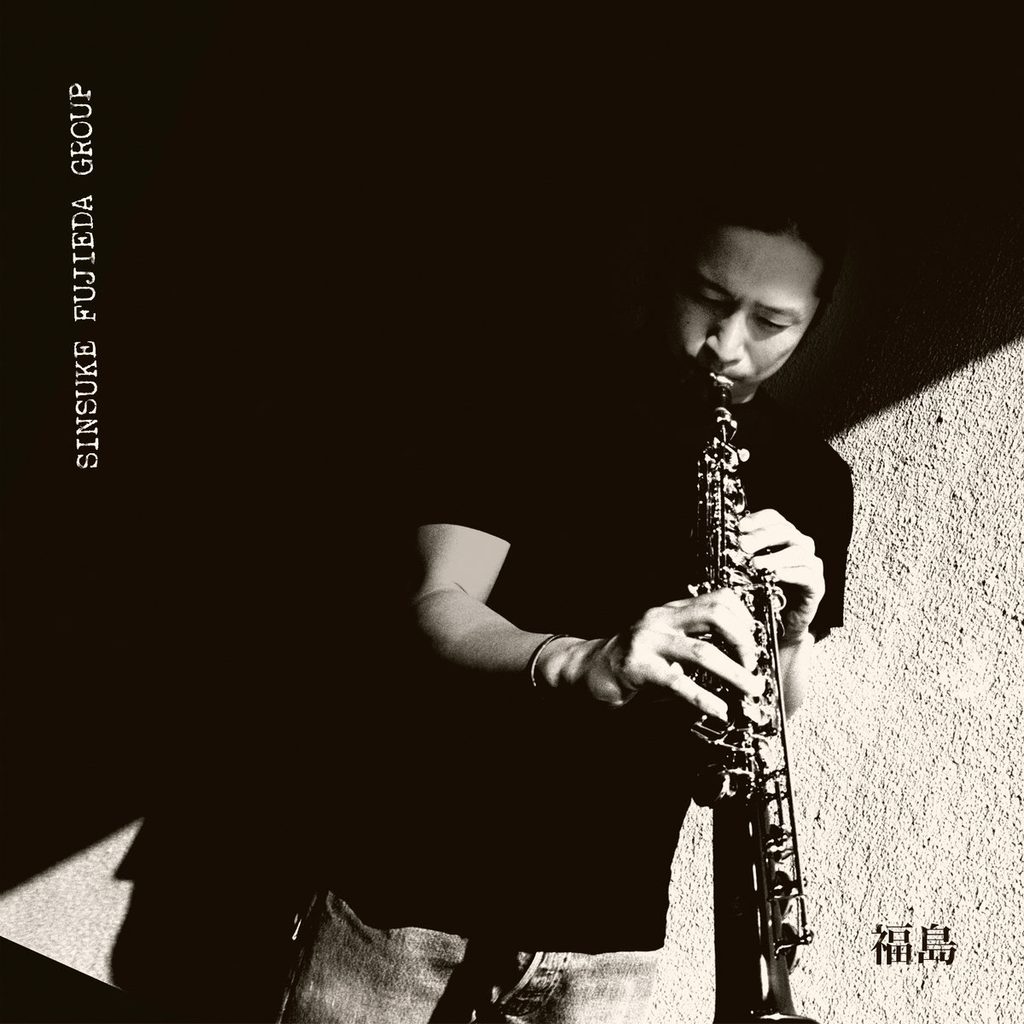
Q9. What inspired the title “FUKUSHIMA,” and what does it mean to you?
I experienced the Great East Japan Earthquake in Tokyo in March 2011.
In the days that followed, I was surrounded by images of devastated towns in northeastern Japan, the land affected by the nuclear disaster, and the unusually dark nights of Tokyo.
I remember feeling completely overwhelmed.
During those days, a melody suddenly came into my mind.
I immediately made a note of it on my phone, then picked up my saxophone and began playing it.
As I played that melody, I gradually began to regain a sense of calm.
And I realised something very important.
No matter how much the world around me might collapse or change, playing the saxophone would always remain a fundamental place where I could return to myself.
That melody eventually became “Fukushima.”
I’ve continued performing the piece over the years, and each performance has changed in some way.
At the same time, the memories and shock of those days may gradually become more distant as time passes. Yet every time I play the piece, those experiences come back to me.
In a way, that process reminds me of how land slowly recovers and regenerates over time.
For me, “Fukushima” is not simply a piece about an event in 2011.
It is music that continues to change alongside my own memories and the passage of time. I believe that ongoing transformation is itself part of the work.
Q10. What is your musical vision for yourself and SoFa Records? Are there artists you’d like to collaborate with?
For me, SoFa Records is a platform through which I can refine and develop what I genuinely believe in, and bring it into the world as something of value. It’s also a system and a brand that allows me to deliver my work directly to people around the world and build a structure where the financial returns can come directly back to the label.
I’m interested in how music created through my own imagination and decisions is received by people in different parts of the world, and in the possibility of connecting with them directly through my work. I want to continue creating records where every element — the music, artwork, sound quality, packaging, and presentation — reflects a clear artistic vision. By continuing to do that, I hope to build the value and unique identity of SoFa Records as a label.
Q11. How do you feel when DJs play your records and people dance to your music?
Of course, it makes me very happy!
My music has a deep connection with vinyl records and DJ culture. Many DJs and record collectors are incredibly passionate listeners who have a genuine love and understanding of music. They are very important to me.
I also believe that music should have the power to work in those environments. And I don’t mean only that people should be able to dance to it. I care deeply about both sound quality and musical content.
I want the music to have a real presence when it’s played on a sound system. And I want to keep bringing my work to people who listen deeply and find great meaning in music and the experiences it creates.
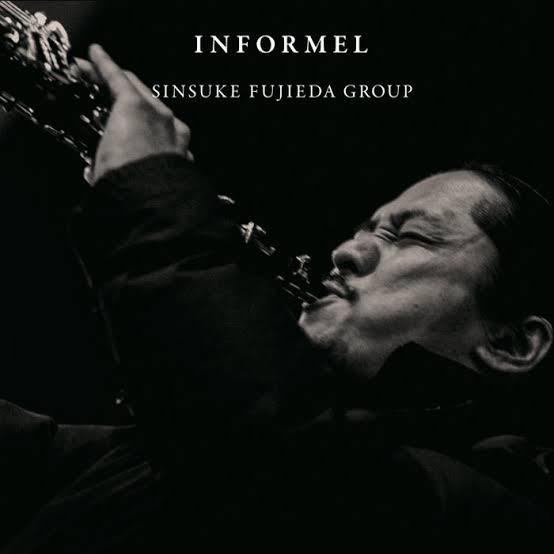
Q12. “INFORMEL” emerged from the COVID-19 pandemic in 2020. Why release it now?
“INFORMEL” originated from a live performance recorded on October 22, 2020.
It was originally released in 2021 as a 2CD + DVD package.
The performance took place during the pandemic, when everyday life around the world was undergoing extraordinary changes. I had conceived the idea of bringing music and live painting together in the same space, allowing them to unfold simultaneously, and documenting everything that emerged from that experience.
Then, in 2025, “FUKUSHIMA” received an incredible response from listeners around the world.
Following that experience, I began thinking about returning to the musical origins of the SINSUKE FUJIEDA GROUP as it exists today.
I wanted to present that earlier work again, but not simply as a reissue.
I wanted to revisit the recordings from my perspective in 2026, re-edit the music, and create a new double LP with completely new artwork.
I also wanted to experience the music on vinyl myself, and I felt that now was the time to bring it to the world. I wanted to hold the finished record in my hands and hear that music in a new form.
That desire led to the release of “INFORMEL” in 2026.
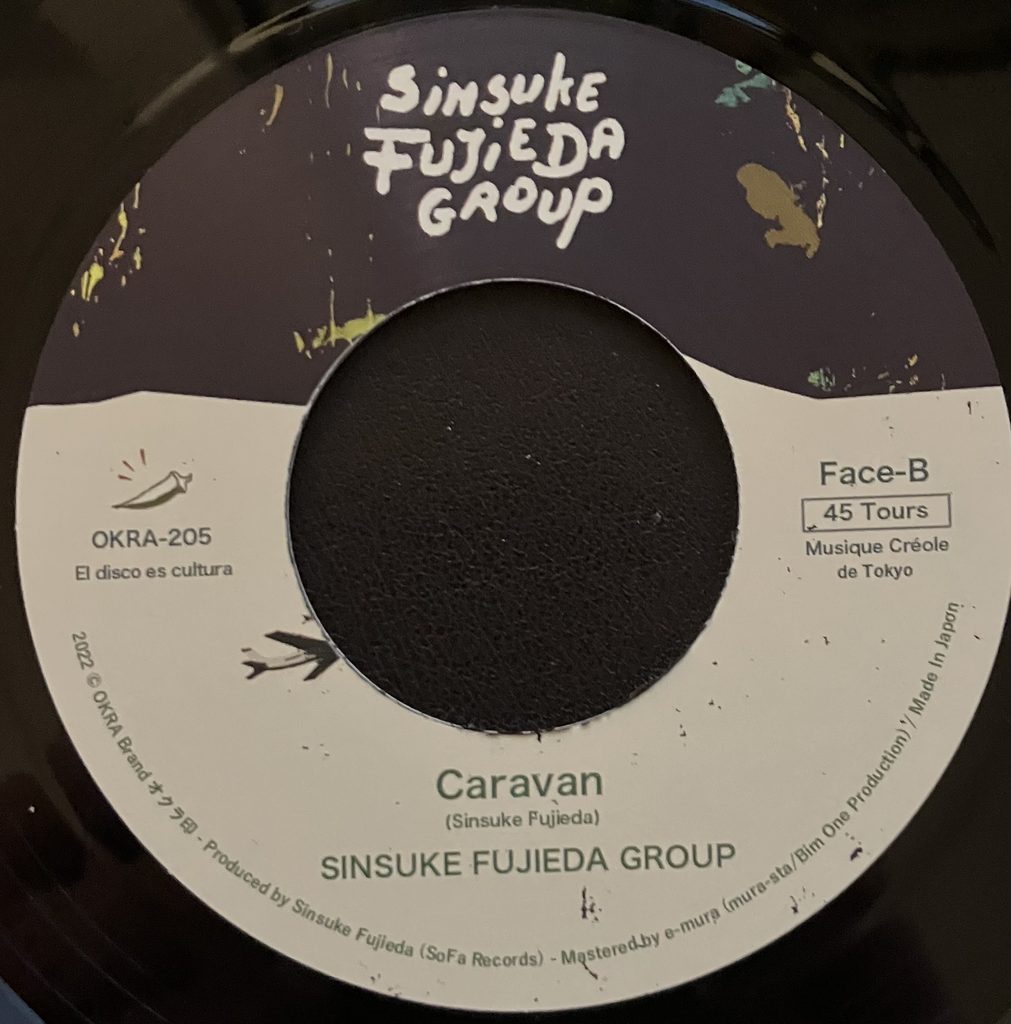
Q13. After the success of your previous 7-inch singles, do you plan to release more 45s?
Yes, absolutely!
I really love the 7-inch format. It has a different kind of appeal from an LP, particularly in the way each track stands on its own.
The sound, the physical format, and the artwork are all important parts of the experience. I’d definitely like to release more 7-inch records through SoFa Records in the future.
Q14. What are your plans for the near future and 2027?
First, on November 21, 2026, SINSUKE FUJIEDA GROUP will perform at ÜBERJAZZ Festival in Hamburg, Germany. I’m really looking forward to bringing our music directly to European audiences.
Link:
https://kampnagel.de/en/productions/grosseb%C3%BChne-ueberjazz-festival-2026-samstag-ueberjazz-festival-2026
In early 2027, we’re planning to release a new double-CD edition of “INFORMEL,” following the vinyl release. This edition will include “In Forest,” a previously unreleased performance of around twenty minutes that wasn’t included on the vinyl edition.
We’re also planning to release a new LP, “ABSTRACTION JAZZ MODE,” in March 2027.
Beyond these releases, I want to continue developing the music of SINSUKE FUJIEDA GROUP through recording and live performances, and bring it to more people around the world.
Q15. Do you have a message for your listeners and supporters around the world?
First of all, thank you so much for listening to and supporting my music. It means a great deal to me that music created here in Japan is reaching people in so many different countries.
I’m truly happy that we’re able to connect through music, even across such great distances.
I’ll continue creating music that I genuinely believe in, and I hope you’ll enjoy what’s coming next.
Warm greetings from Tokyo,
Sinsuke Fujieda
SoFa Records
https://sofa-records.bandcamp.com
https://sinsukefujieda.com
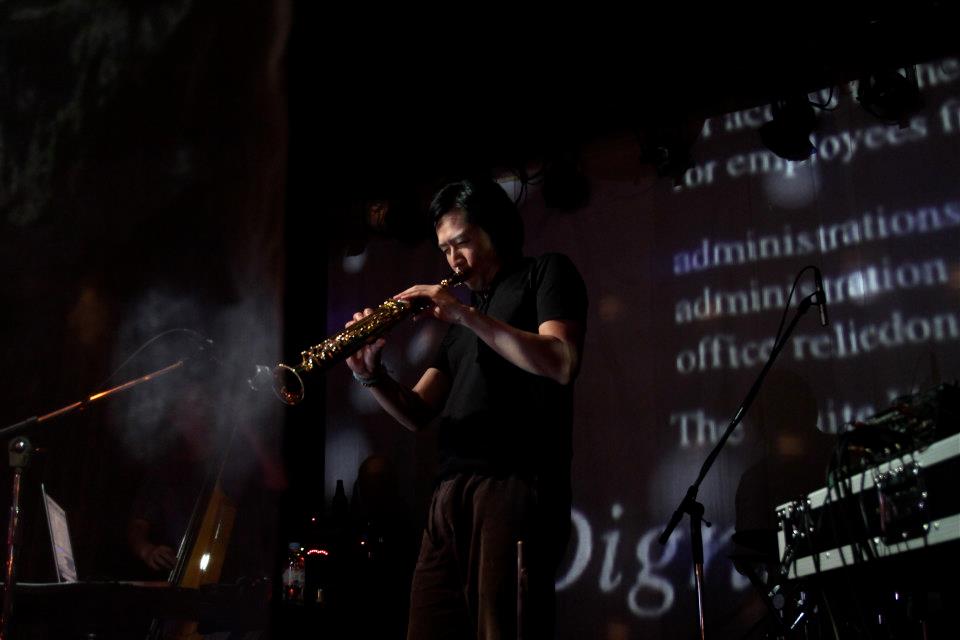
Photo by Akira Uehara